If you are thinking about trading extra rooms for a simpler city home, Back Bay can be a compelling place to do it. Downsizing here is not just about buying less space. It is about choosing how you want to live day to day, what costs you want to carry, and which building style fits you best. If you are considering a Back Bay condo, the right plan can help you avoid expensive surprises and feel confident in your next move. Let’s dive in.
Back Bay Comes With a Premium Price Tag
Back Bay is one of Boston’s most established and appealing neighborhoods, and condo pricing reflects that. Recent public market snapshots place the neighborhood at the high end of the city, with median sale and listing figures ranging from roughly $1.52 million to $1.8 million depending on the source and methodology.
That range matters if you are downsizing from a larger home and expecting a smaller purchase price to automatically mean a simpler budget. In Back Bay, you should plan for a premium market and avoid building your expectations around one headline number from a single website. A realistic budget starts with the understanding that location, building type, condition, and services can all move pricing significantly.
Right-Size for How You Live
The biggest downsizing mistake is focusing only on square footage. Two condos with the same size can live very differently, especially in a dense, historic neighborhood like Back Bay where layouts vary widely from building to building.
Instead, think about the functions you want your next home to support every day. Your ideal condo should fit how you move through your routine, not just what looks efficient on paper.
Daily-life features to prioritize
- One-level living if you want easier day-to-day circulation
- Elevator access if stairs may become a challenge or inconvenience
- In-unit laundry or dependable on-site laundry
- Storage for seasonal items, luggage, and keepsakes
- Space for a home office or reading area
- Room for occasional guests or family visits
- Parking if you want to keep a car in the city
- Guest parking if visitors regularly drive in
When you tour condos, ask yourself simple questions. Can you comfortably entertain a few friends? Is there a practical place for coats, groceries, and everyday items? Will the space still work for you a few years from now, not just on move-in day?
Brownstone or Full-Service Building?
In Back Bay, many downsizers end up deciding between two very different condo experiences. One path is a classic brownstone conversion with historic character. The other is a newer or more full-service building with shared systems and services.
Neither option is automatically better. The right fit depends on how much character, convenience, flexibility, and predictability you want in your next home.
What a brownstone conversion may offer
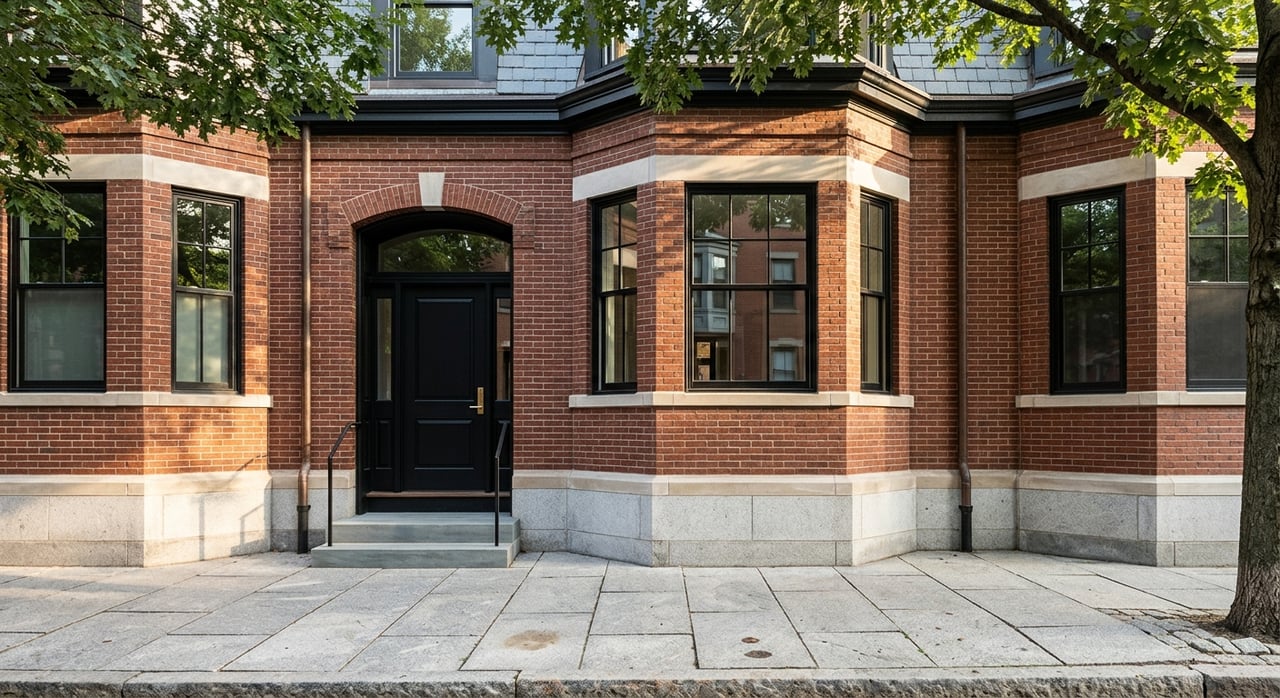
Brownstone condos often appeal to buyers who want original charm, traditional architecture, and a classic Back Bay setting. These homes can offer a strong sense of place that is hard to replicate.
At the same time, Back Bay is a protected historic district. The Back Bay Architectural District Commission reviews exterior design changes and alterations, and district guidelines emphasize maintaining and repairing historic materials and features rather than replacing them. Changes to primary facades are generally considered inappropriate, and demolition of historic structures is prohibited in the residential portion of the district.
That means a brownstone may come with less exterior flexibility than you expect. If your downsizing plan includes making visible exterior changes, you will want to understand those limits early.
What a full-service building may offer
Full-service buildings often appeal to buyers who want more day-to-day upkeep handled through shared building operations. Depending on the property, that can mean a more streamlined ownership experience centered around common systems, management, and building services.
That convenience usually shows up in the monthly condo fee. In Massachusetts, common expenses and reserves flow through the association budget, which is then reflected in what owners pay. For many downsizers, the question is whether the service level is worth the ongoing cost.
Treat Condo Documents Like Part of the Property
When you buy a condo in Massachusetts, you are not just buying the unit. You are also buying into a private ownership and governance structure shaped by the master deed, deed, bylaws, and Chapter 183A.
The Commonwealth states that it does not directly regulate condominiums. That is why condo documents should be treated as part of the home itself, not as paperwork to skim at the end.
Key document questions to review
- What does the monthly condo fee include?
- How much is held in reserves?
- Has the building had recent special assessments?
- Are there rules about pets, parking, storage, or renovations?
- Are there usage limits that could affect your lifestyle?
Massachusetts guidance also says condo records must be available for inspection by unit owners and first mortgagees. If you are comparing two buildings, the documents can tell you as much as the finishes and floor plan.
Understand the Full Cost of Ownership
A downsizing move can simplify your life, but only if you go in with a complete picture of the carrying costs. In Back Bay, your budget should reach far beyond the purchase price.
Monthly condo fees are determined by the annual budget and are usually paid monthly. That budget can include reserves and contingency reserves, and Massachusetts law requires an adequate replacement reserve fund that is separate from operating funds.
Costs to plan for
- Purchase price
- Monthly condo fee
- Property taxes
- Closing costs
- Moving costs
- New furniture
- Repairs or improvements
- Possible future special assessments
Special assessments are especially important to ask about in older or highly maintained buildings. Massachusetts guidance says they can be charged above and beyond the current budget and reserves when a capital item needs replacement.
Boston property tax basics
Boston’s posted residential tax rate for FY26 is $12.40 per $1,000 of assessed value. The city also notes that the current fiscal-year tax rate appears on the third-quarter tax bill.
If you plan to occupy the condo as your principal residence, you may want to look into Boston’s residential exemption. For FY27, the city says qualified homeowners may be eligible if they recorded a deed at the Suffolk County Registry of Deeds and occupied the property as a principal residence between January 1 and June 30, 2026. Applications are due April 1, 2027, and the city says the exemption saved qualified homeowners up to $4,353.74 on the prior fiscal year’s bill.
Don’t Forget Closing and Move Costs
It is easy to underestimate the cash needed to complete a downsizing move, especially if you are focused on sale proceeds or equity. Your next home may be smaller, but your transaction costs still need careful planning.
Typical closing costs are often estimated at 2% to 5% of the purchase price, not including the down payment. You should also set aside money for moving costs, furniture that fits the new layout, repairs, and any home improvements you want to make soon after closing.
Plan the Sale and Purchase Timeline
If you are moving from one home into another, timing matters almost as much as the condo itself. A smooth downsizing move usually starts well before you write an offer.
Consumer guidance says that people who want to move normally try to sell their current home first before buying another one. In a market like Back Bay, where public snapshots show homes moving in roughly 17 to 36 days depending on the source and metric, preparation can help you stay ahead of the pace.
A simple downsizing timeline
Early planning
Define your must-haves, ideal building style, and full budget. This is also the time to think through what furniture, belongings, and routines will actually fit your next home.
Search and document review
Compare buildings, layouts, fees, and condo documents. This stage helps you narrow the field to properties that work financially and practically.
Under contract
Once an offer is accepted and you have chosen a loan, the focus shifts to lender documents, the home inspection, insurance, and closing document review. This is also when building details and association information need close attention.
Closing and move coordination
Mortgage closing and home-purchase closing typically happen at the same time. If you are also selling a home, this is where strong coordination can make the transition much less stressful.
Why the Right Guidance Matters in Back Bay
Downsizing in Back Bay is rarely a one-variable decision. You are balancing lifestyle, building type, monthly costs, historic considerations, timing, and long-term comfort all at once.
That is why local, building-level insight matters. A condo that looks perfect online may feel inefficient in person, while a less obvious option may better match the way you actually want to live.
If you are weighing a brownstone conversion against a full-service building, sorting through fees and reserves, or trying to line up a sale with your next purchase, working with someone who knows Boston’s condo market can make the process far more strategic. When you are ready to talk through your move, connect with John Dolan to schedule a consultation or explore your options.
FAQs
What should you prioritize when downsizing into a Back Bay condo?
- Focus on daily-life needs like layout, elevator access, laundry, storage, parking, guest space, and how the condo will function for you over time.
How expensive is the Back Bay condo market?
- Back Bay is a premium Boston market, with recent public price snapshots ranging roughly from $1.52 million to $1.8 million depending on the source and methodology.
What is the difference between a Back Bay brownstone condo and a full-service building?
- A brownstone condo often offers more historic character, while a full-service building may offer more shared services and convenience through common building operations and systems.
What condo fees and financial details should you review in Massachusetts?
- Review what the monthly fee covers, reserve levels, recent or planned special assessments, annual budget details, and rules that may affect your use of the property.
How are property taxes handled for a Back Bay condo in Boston?
- Boston’s FY26 residential tax rate is $12.40 per $1,000 of assessed value, and owner-occupants may also want to review eligibility for the city’s residential exemption.
When should you sell your current home if you are downsizing into a condo?
- Consumer guidance says people who want to move normally try to sell their current home first before buying another one, though your exact timeline should match your finances and goals.